June 26th - September 5th, 2026
In Between | Jonathan Binet
Galerie Mazzoli // Eberswalder Str. 30, Berlin
Jonathan Binet was born in St. Priest, France in 1984, lives and works in Paris.
Binet studied at École Nationale Supérieure des Beaux-Arts in Paris and at École des Beaux-Arts in Saint- Étienne. Among the major solo exhibitions he has held are those at Balice Hertling, Paris, France (2016 and 2024), Spazio ORR, Brescia, Italy (2021), Berthold Pott, Cologne, Germany (2020), Galerie Stadtpark, Krems, Austria (2017), Galleria Mazzoli, Modena, Italy (2017), Bonner Kunstverein, Bonn, Germany (2015), Carl Kostyál, London, UK (2015), Kunst Halle Sankt Gallen, Sankt Gallen, Switzerland (2015), Centre d'Art Neuchâtel, Neuchâtel, Switzerland (2014), Musée d'Art Contemporain de Bordeaux, Bordeaux, France (2012), Palais de Tokyo, Paris, France (2012) and at Gaudel de Stampa, Paris , France, (2011). In 2008 he was awarded the "Prix des Amis des Beaux-Arts, Prix Gérard Viquel". Among the latest group exhibitions "Quel jour sommes-nous" at Tokonoma in Kassel in 2022, and "Shelter in the folds of the infinite" at Sans Titre in Paris in 2021.
PRESS RELEASE
Galerie Mazzoli is pleased to present in between, the first solo exhibition in Berlin by French artist Jonathan Binet.
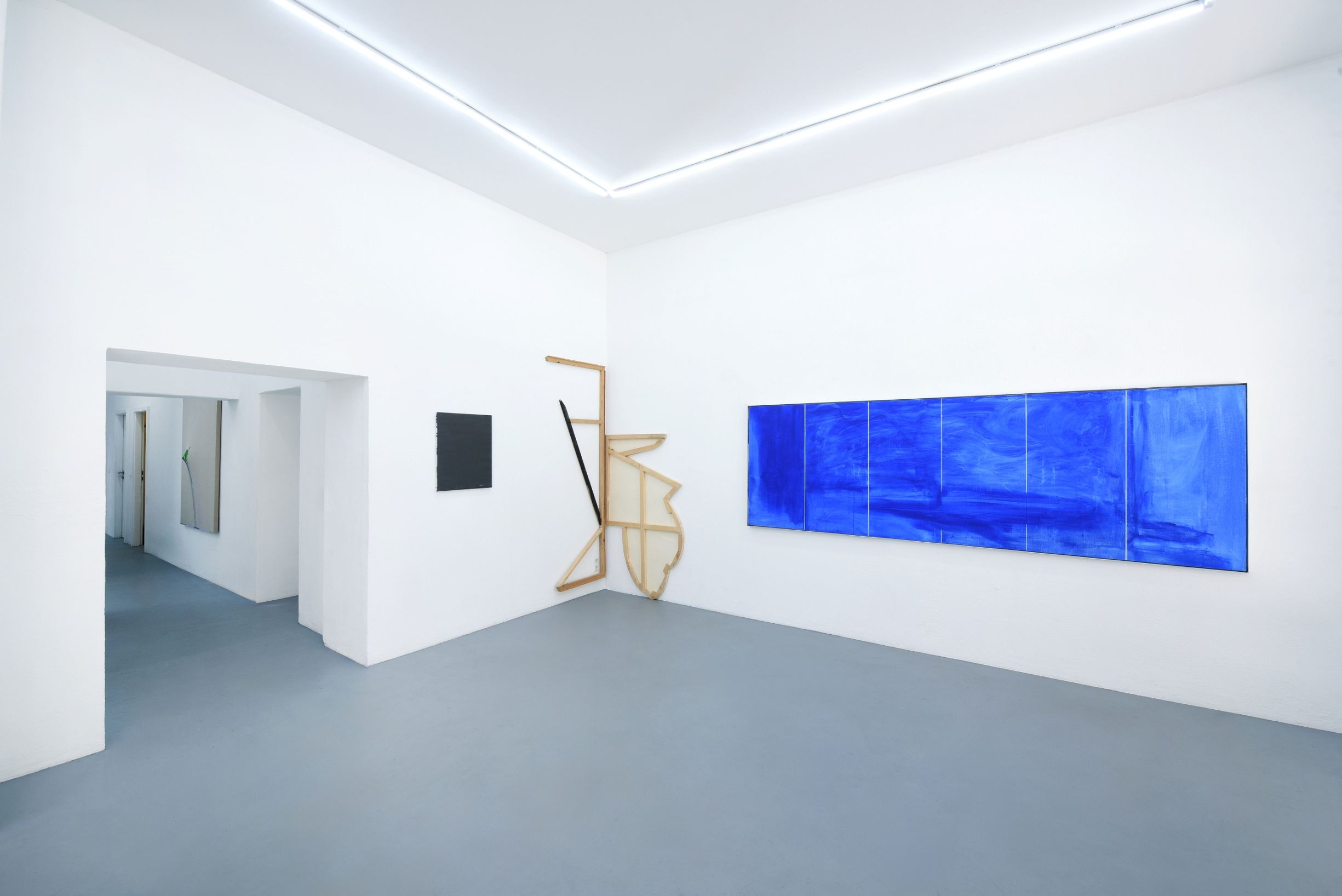
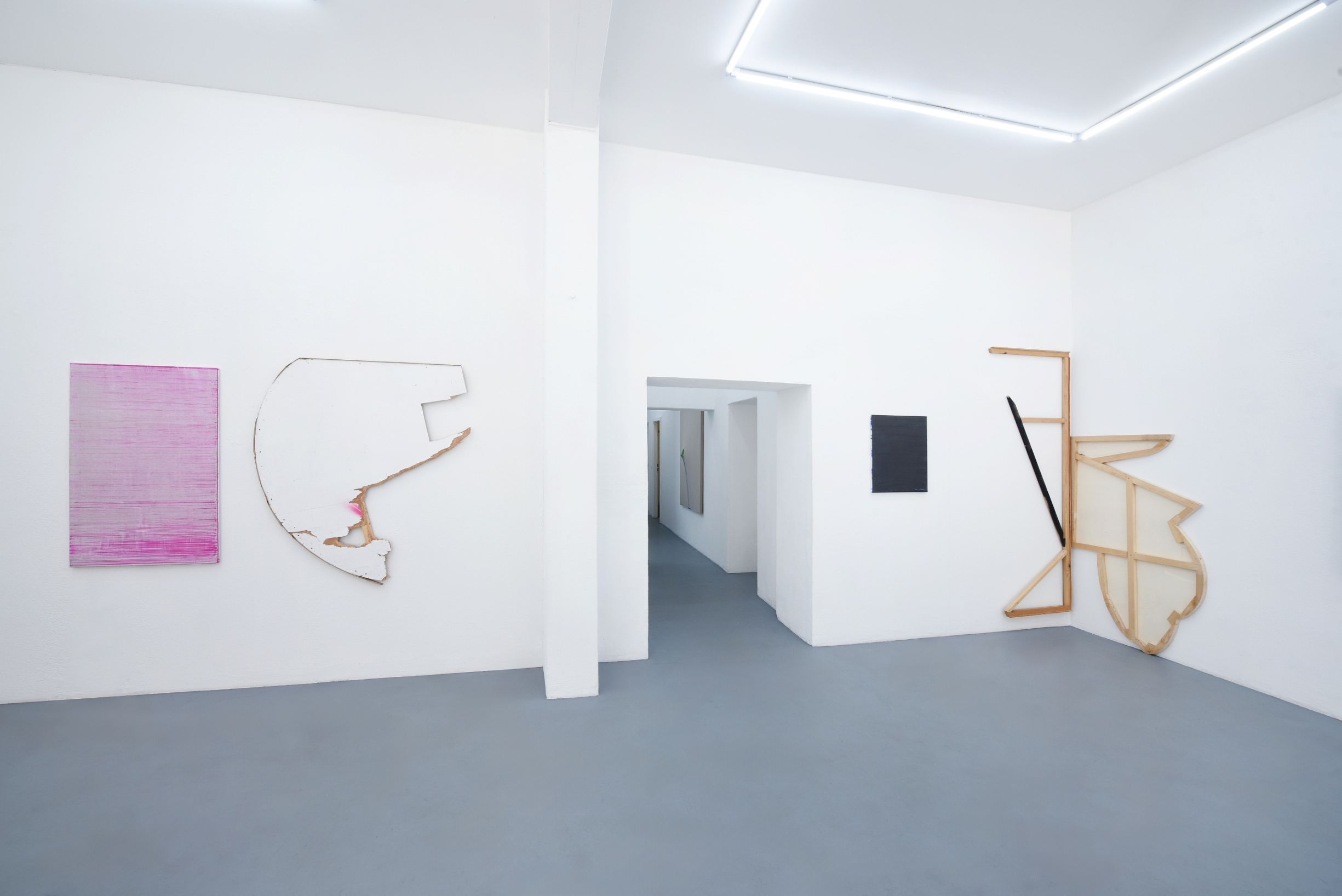
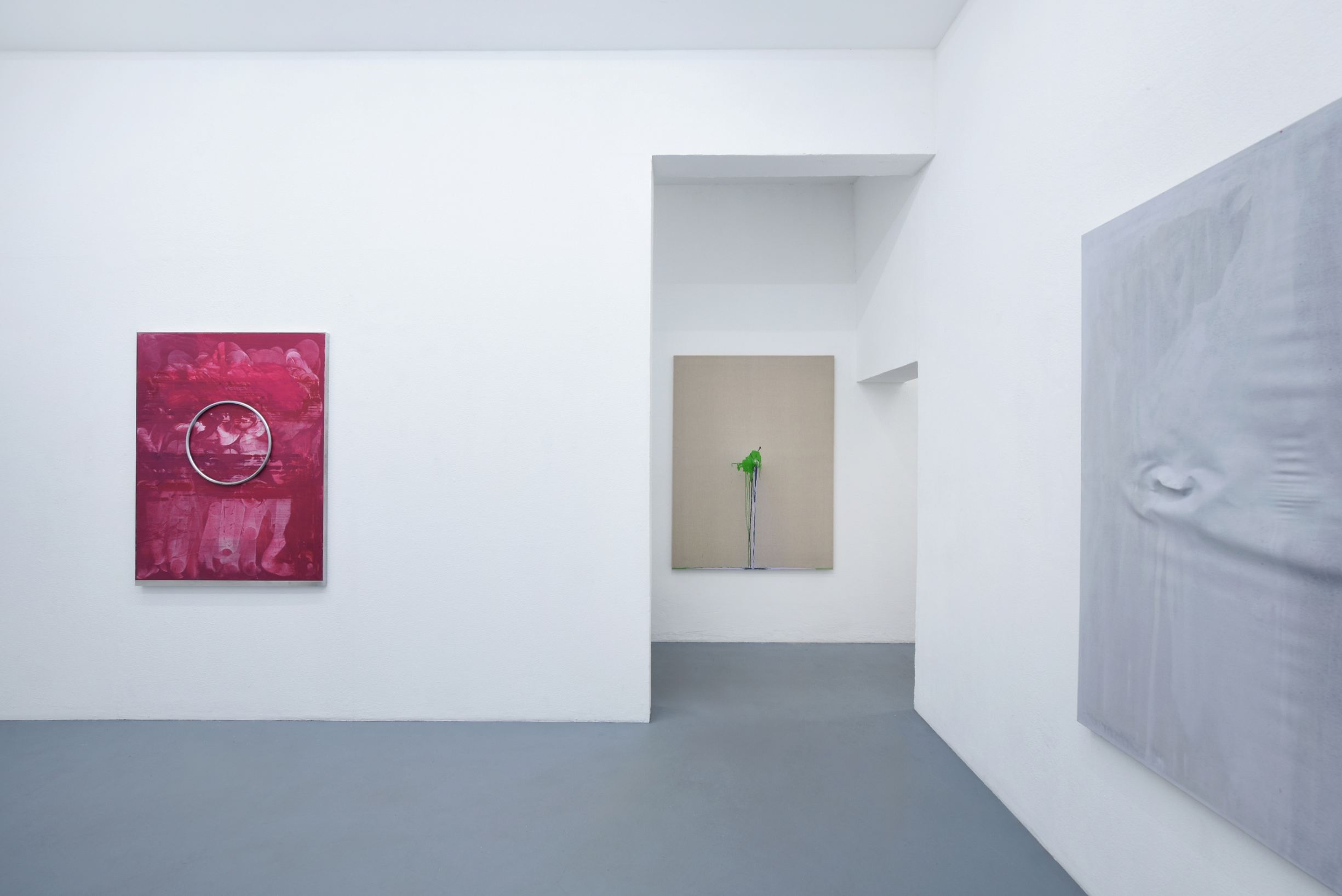
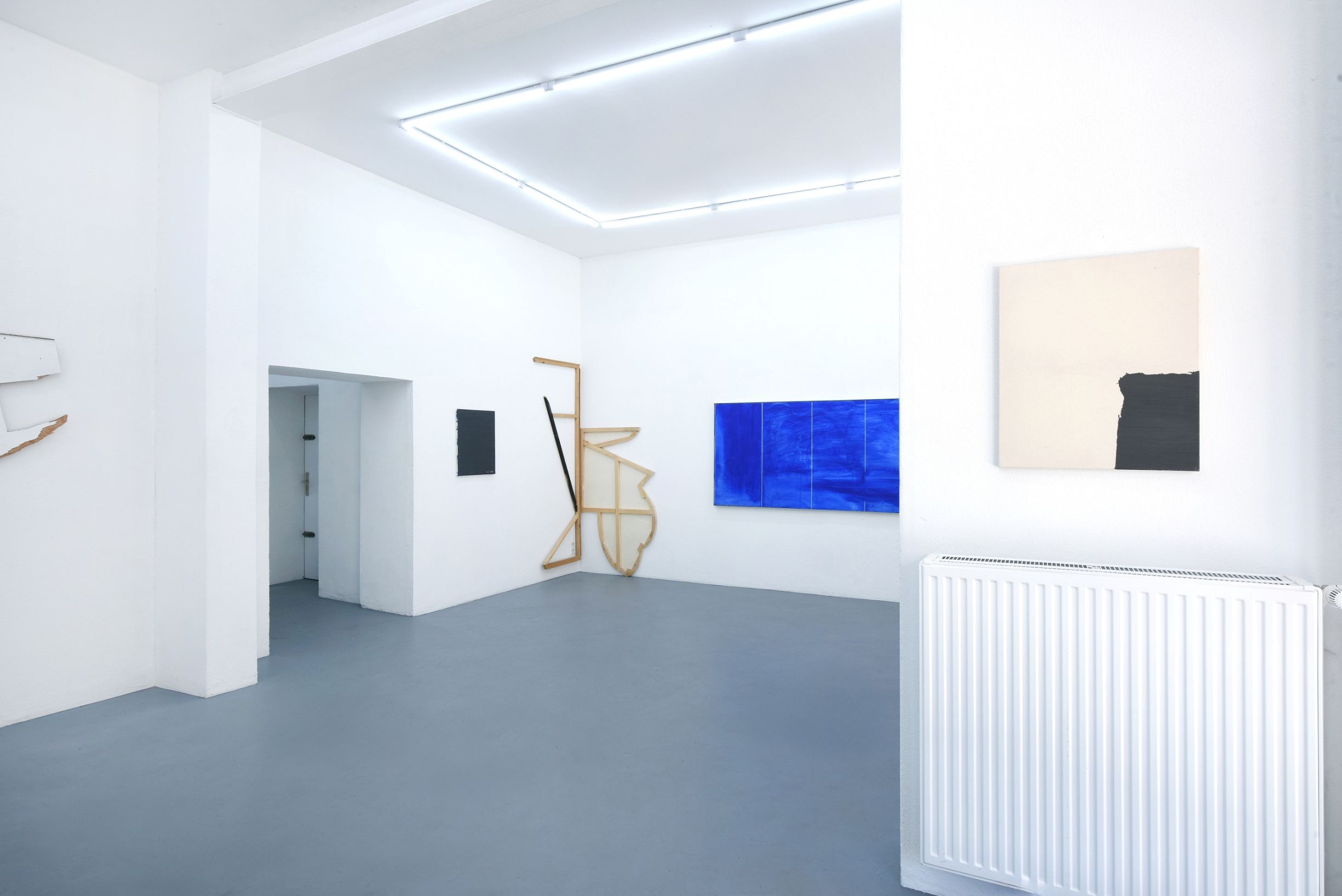
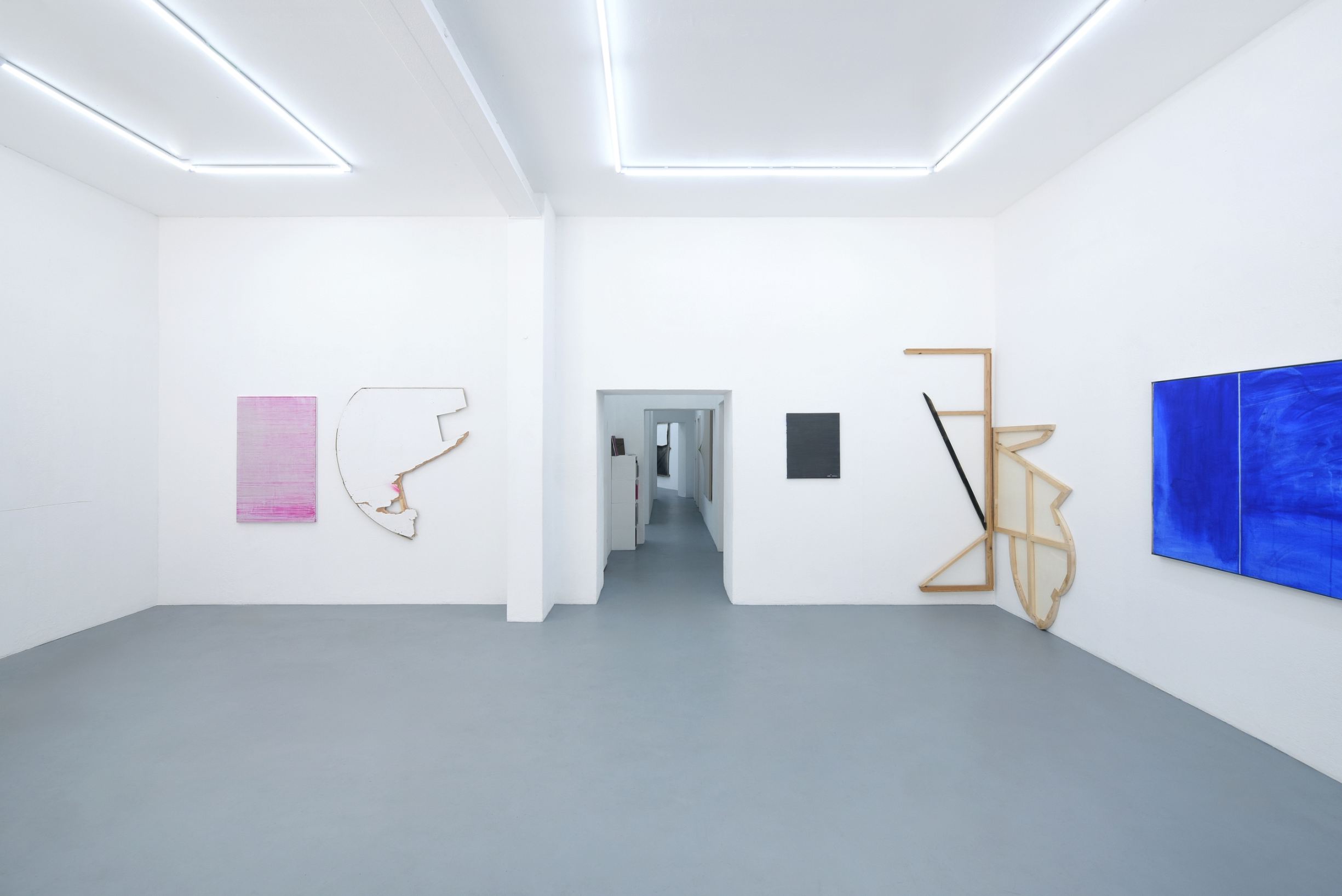
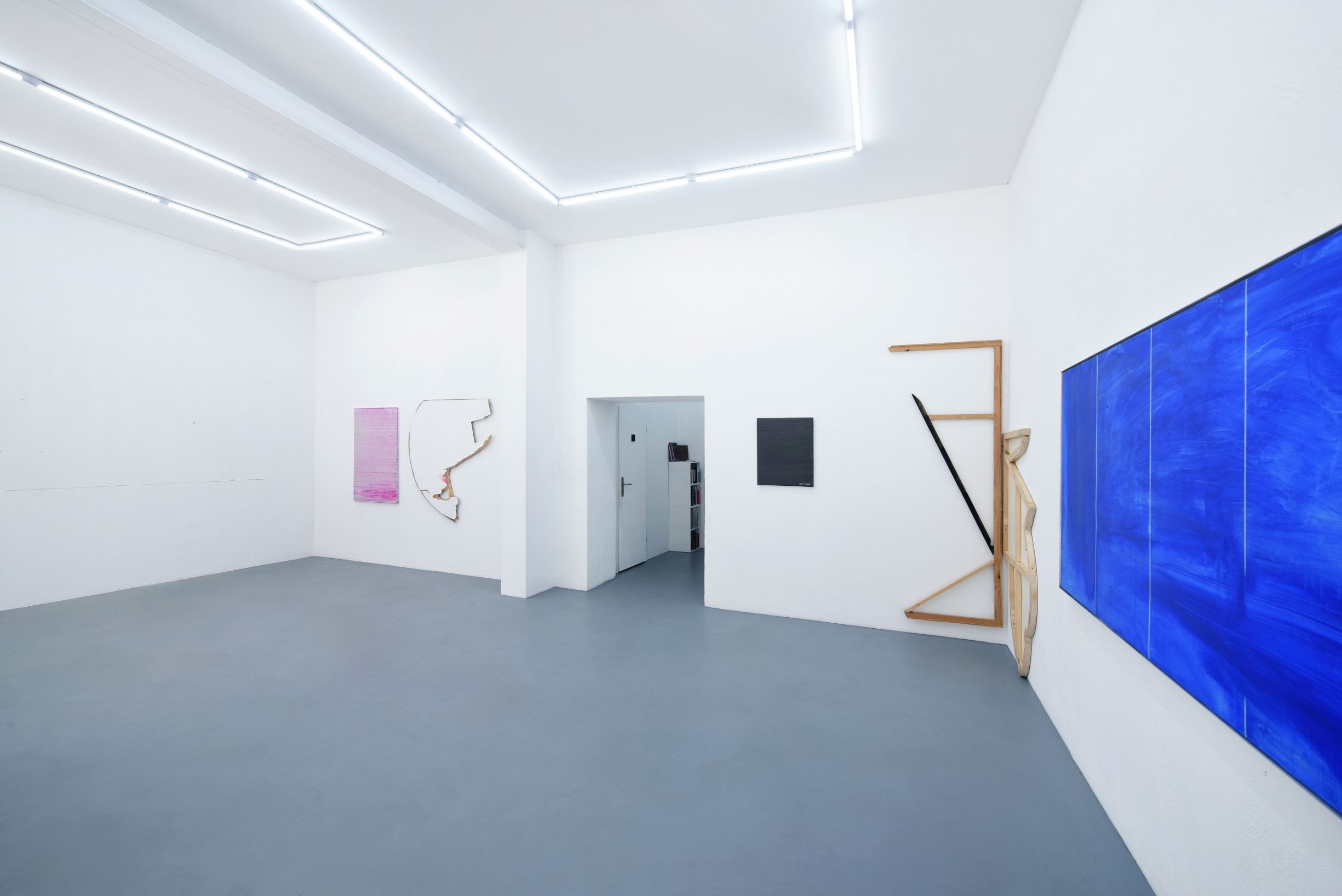
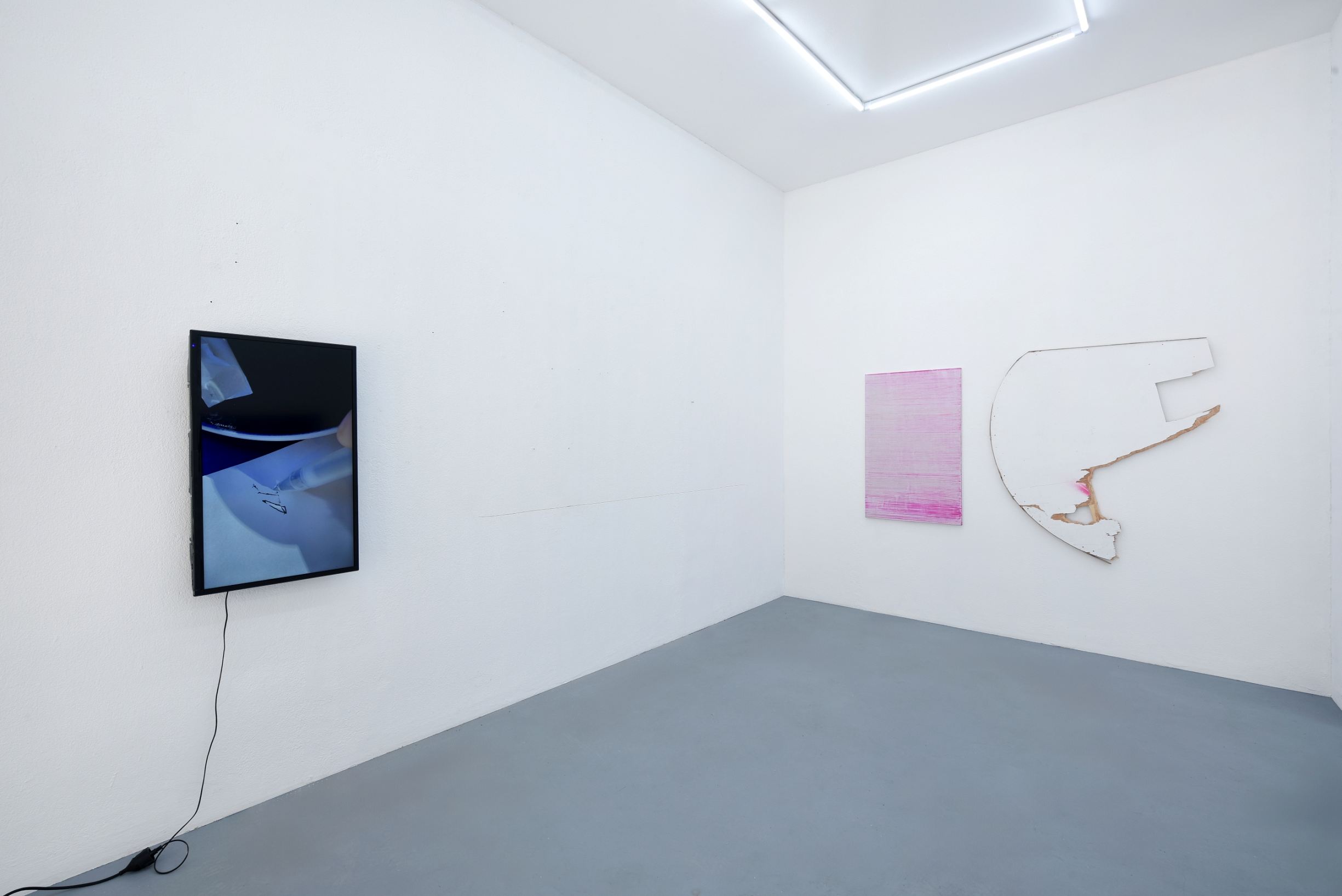
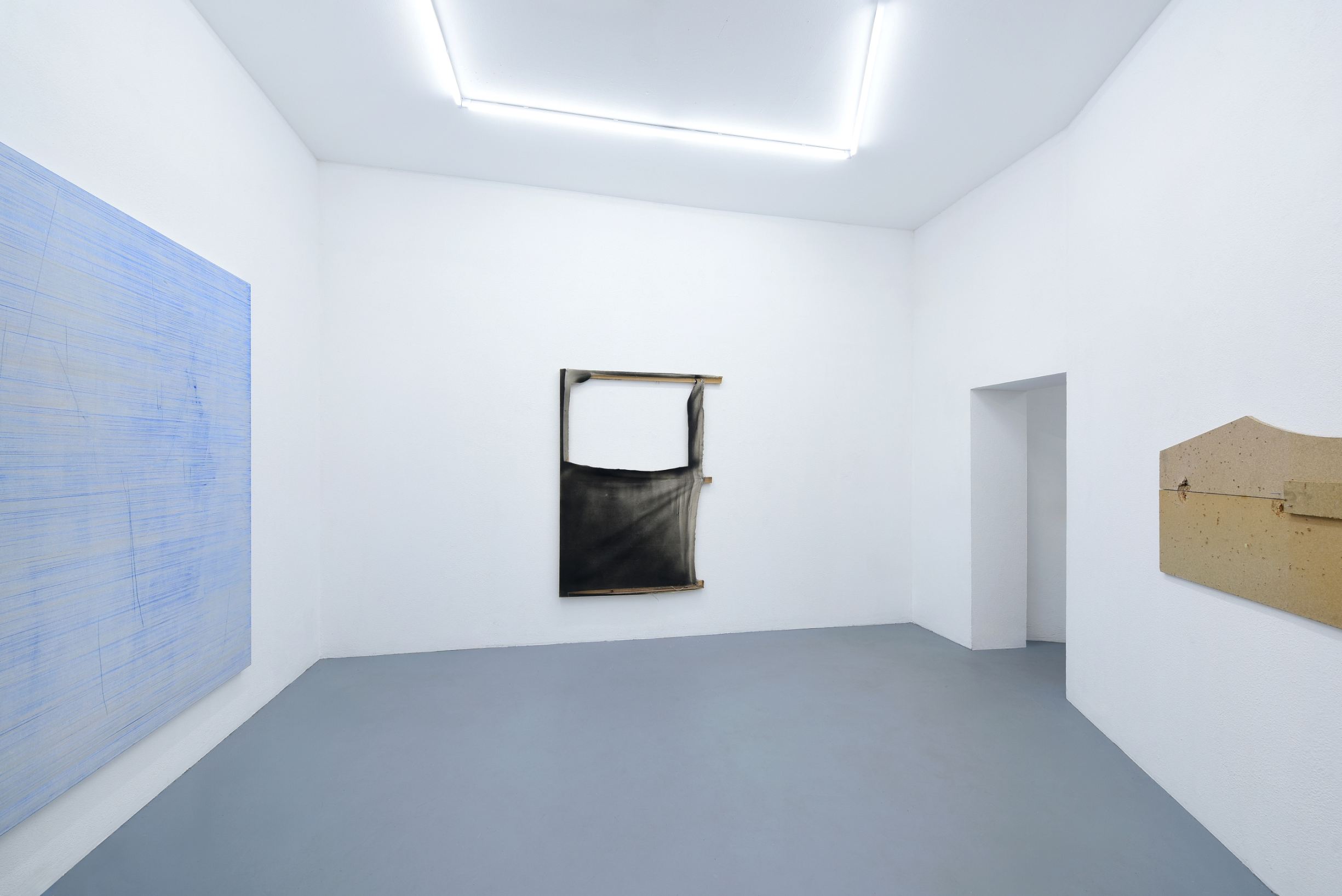
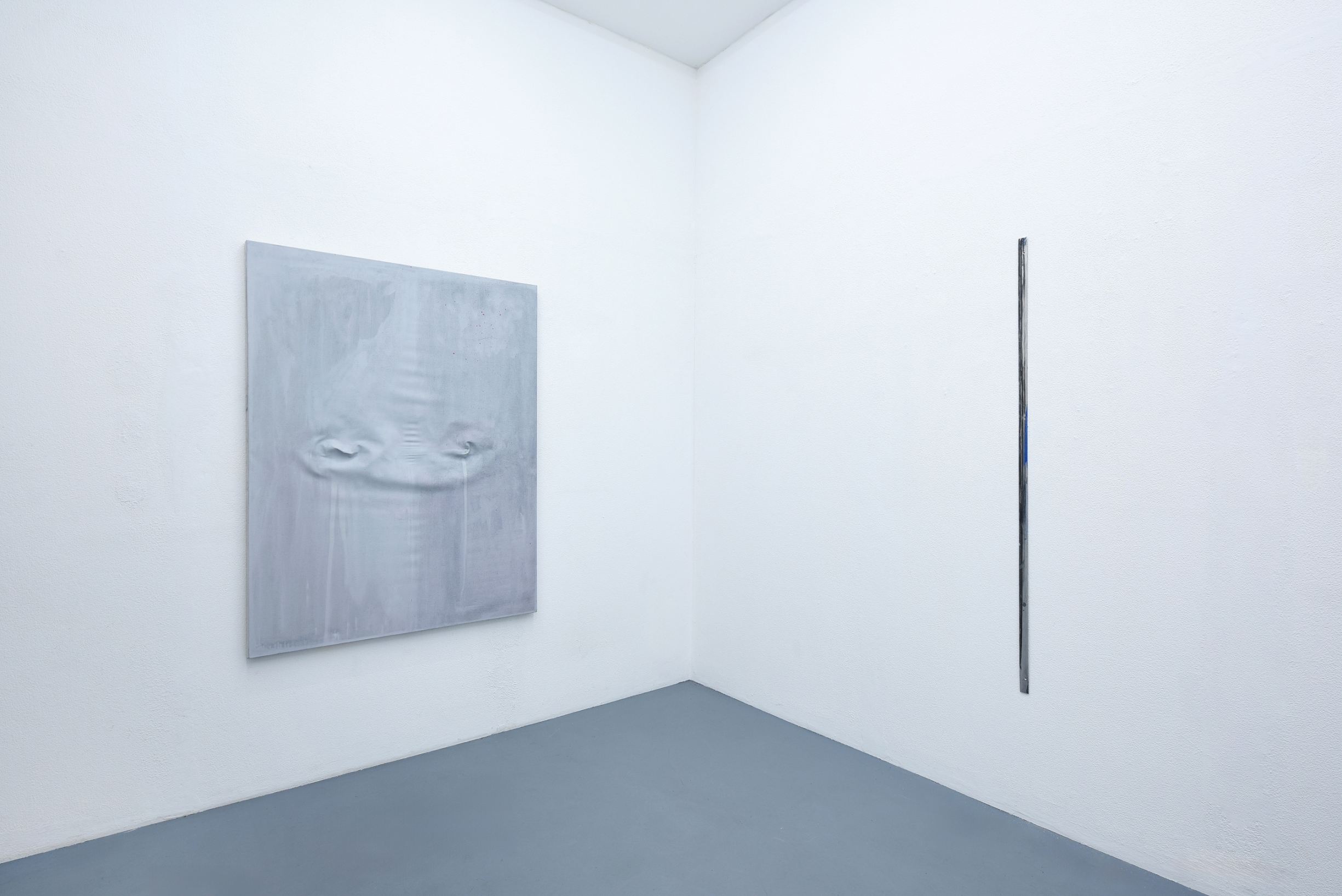
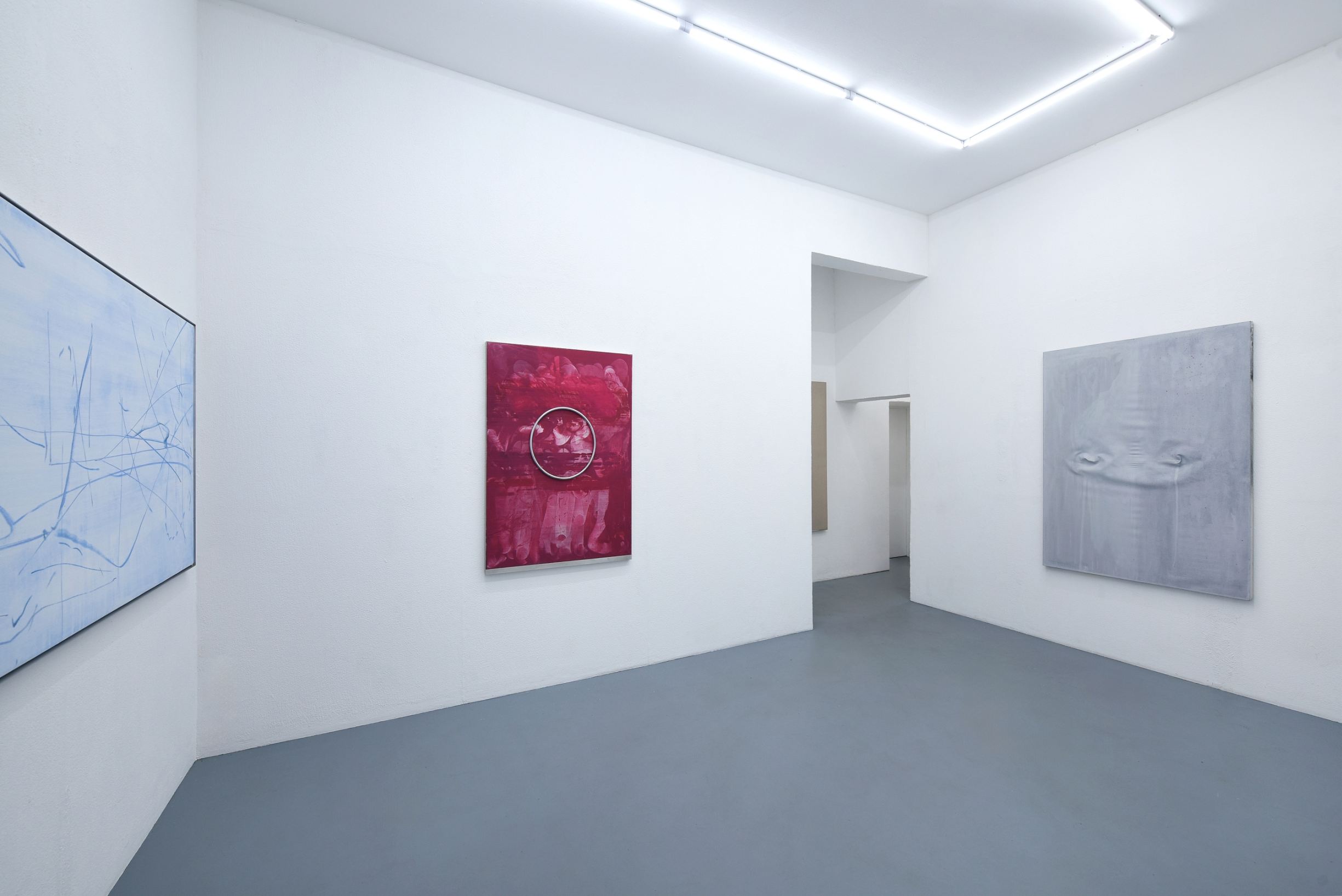
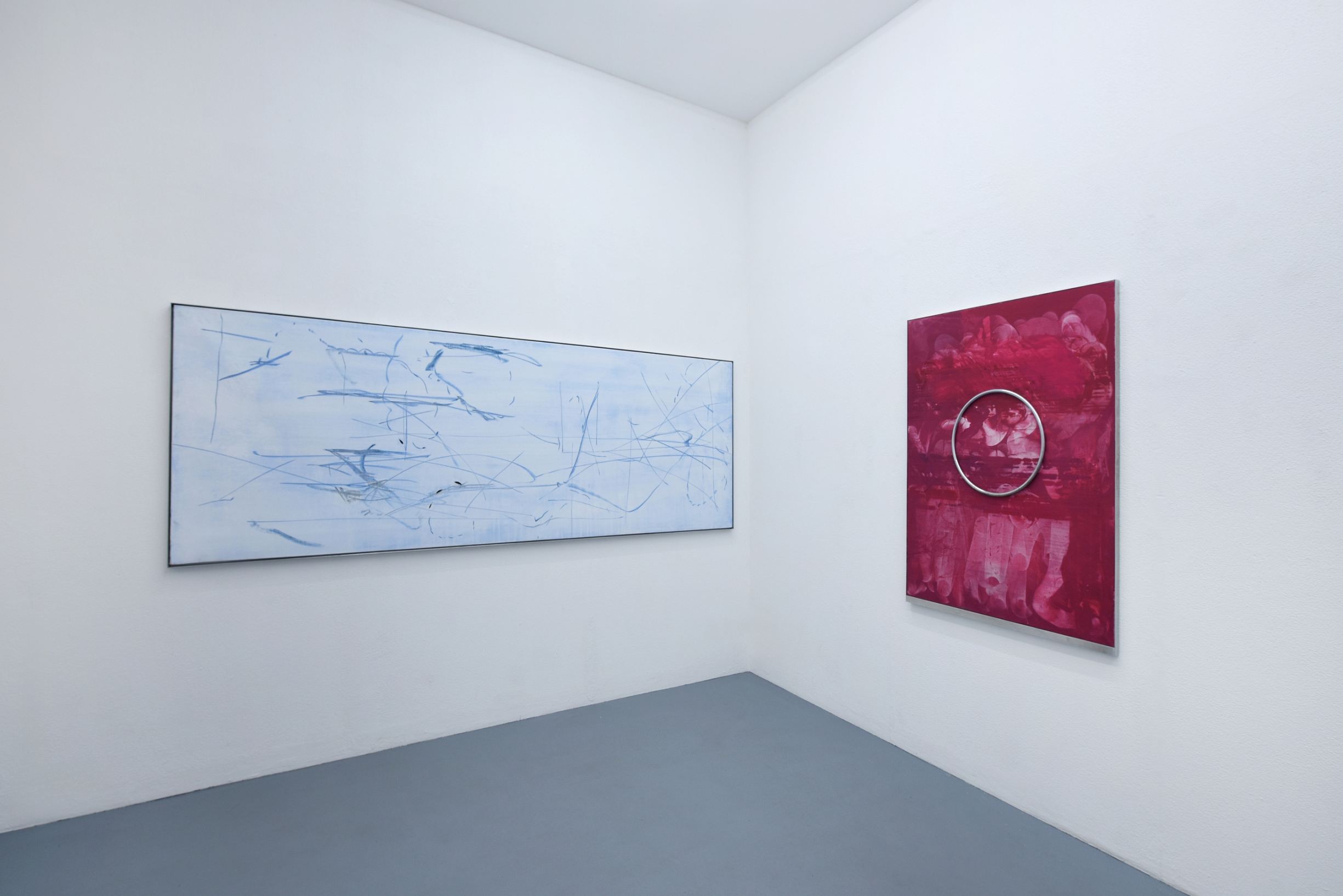
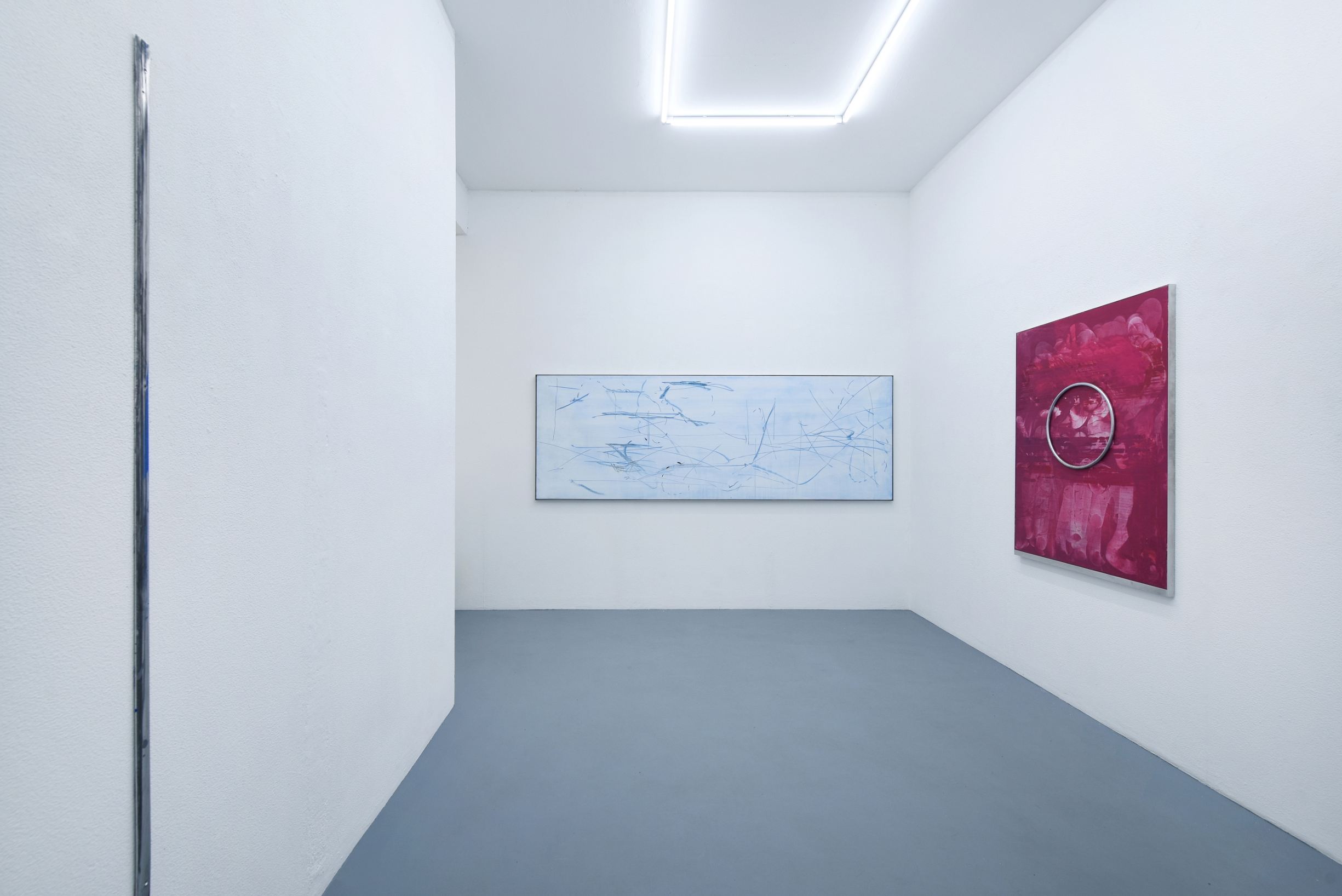
Bringing together a focused group of recent works, the exhibition offers insight into a practice that unfolds in the space between intention and accident, decision and uncertainty. While painting remains central to Binet's work, it is understood less as the execution of a preconceived image than as a process of observation, selection, and response to what emerges during its making.
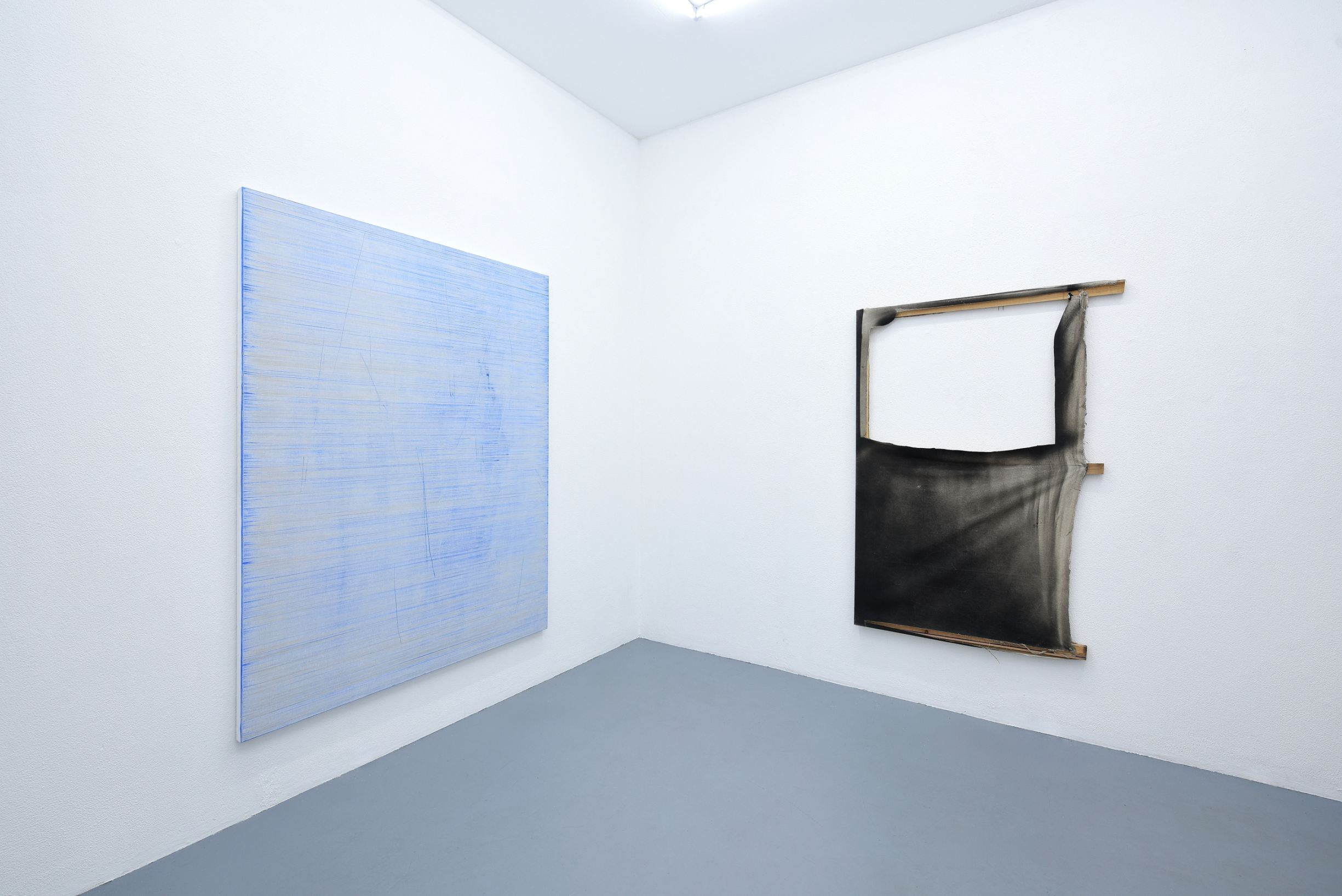
As the artist has noted, what interests him most is the gap between an initial idea and the final work. Beginning from a direction that is often only partially defined, Binet allows the unforeseen to play a significant role. Accidental marks, peripheral gestures, traces left by previous actions, and elements that lie beyond his immediate control frequently become the most vital components of the work. Rather than correcting or suppressing these occurrences, he attends closely to them, allowing them to redirect the process and shape its outcome.
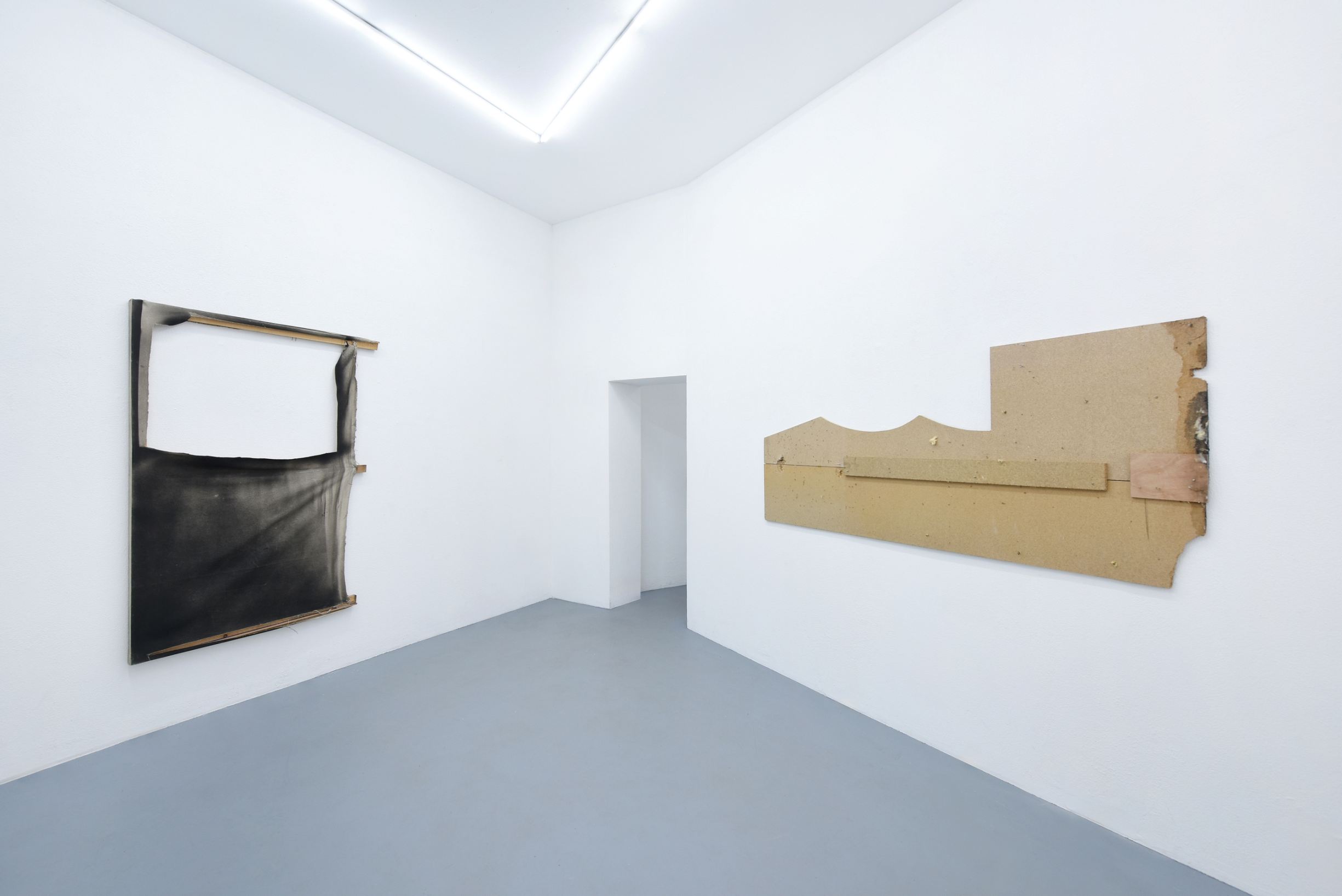
A notable aspect of the works presented in In Between is the role of color, which appears here with a prominence that distinguishes this body of work from much of Binet's earlier production. Rather than functioning as a vehicle for expression or composition in a traditional sense, color operates as another variable within the work's evolving logic. At times it appears as a flat, seemingly autonomous ground, establishing a field against which other interventions unfold. Elsewhere, it emerges almost incidentally, as a disruption that interrupts the visual order of the piece. In this respect, color assumes a role comparable to Binet's scratches, cuts, and other gestures: not a means of resolving the image, but of complicating it, introducing moments of friction, uncertainty, and unexpected possibility.
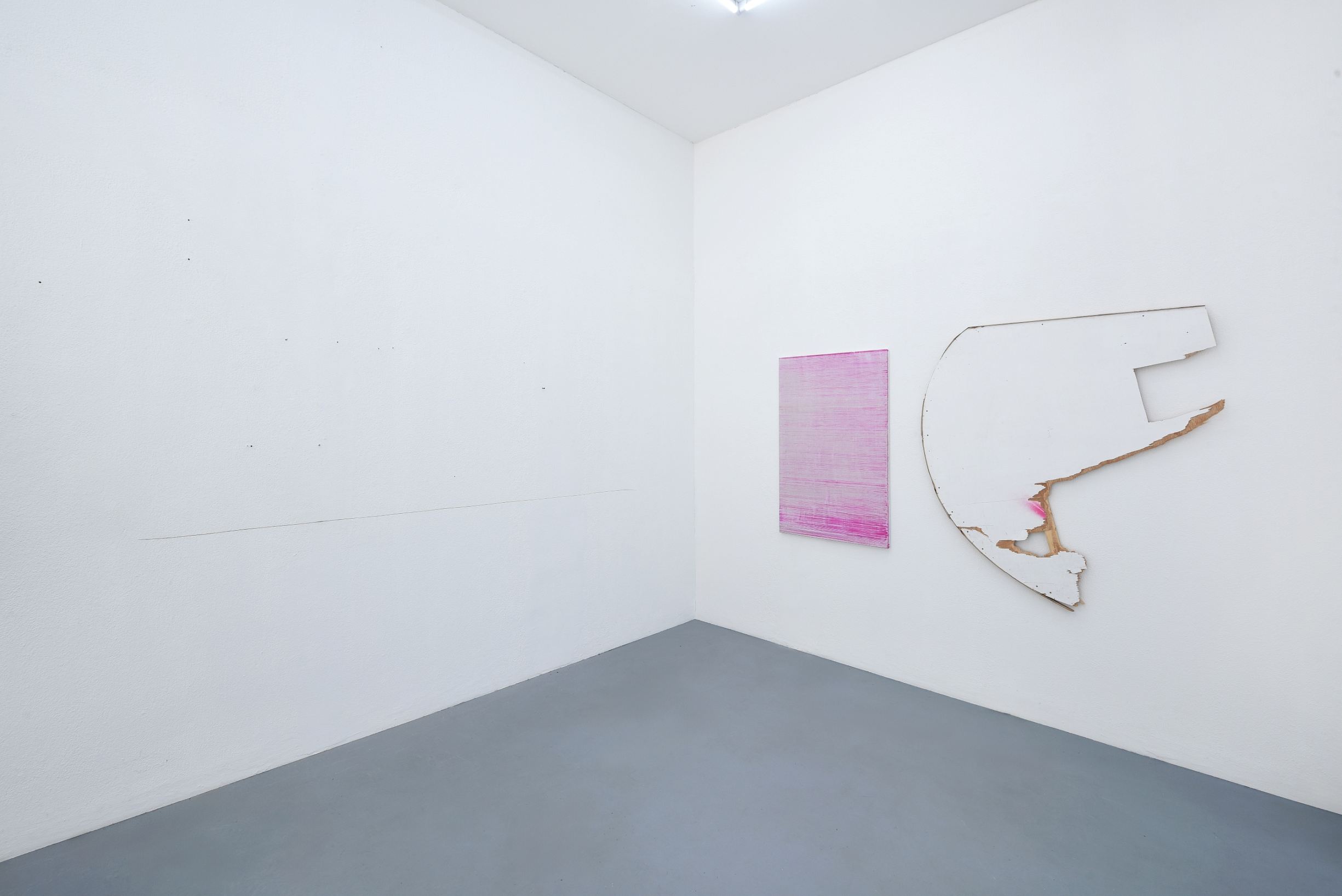
A particularly emblematic work in the exhibition offers a compelling insight into Binet's approach. Like all the works presented here, it remains untitled, reflecting the artist's desire to avoid directing viewers toward specific narratives, images, or interpretative frameworks. The work originates from a section of the studio wall that had accumulated traces from the production of other paintings over time: accidental marks, color deposits, splashes, and residual gestures left behind in the course of unrelated activities. Drawn to the density and complexity of these unintended formations, Binet recognized in them a visual and conceptual potential that exceeded their status as mere by-products of the studio process. Rather than reproducing or translating these traces into a new painting, he chose to isolate and remove the fragment itself, transforming a portion of the studio wall into an autonomous work. The piece embodies many of the questions that animate In Between: the uncertain boundary between intention and accident, the shifting distinction between what constitutes the artwork and what remains outside it, and the artist's role not simply as maker, but as observer and selector. What was initially peripheral becomes central; what was never meant to be seen becomes the work itself.
It is within this interval—between what is intended and what appears—that Binet's work finds its particular intensity. The paintings seem suspended between deliberation and chance, between what has been consciously chosen and what has simply been allowed to remain. Their formal precision is counterbalanced by an openness to contingency, creating works that resist closure and fixed interpretation. What emerges is not the illustration of an idea but the record of an encounter between intention and circumstance.
Central to Binet's practice is the act of looking. Once a gesture has been made, the work demands careful observation: a sustained process of determining what belongs to the work and what does not. In this sense, painting becomes a form of inquiry rather than affirmation. The artist's role is not only to produce images but also to recognize them—to identify meaning within the residues of a process that is never entirely predictable.
Marking Jonathan Binet's first solo exhibition at Galerie Mazzoli Berlin, In Between highlights an artistic practice that embraces uncertainty as a productive condition. The works invite viewers to inhabit the same space of attention and hesitation from which they emerged: a space where intention and accident, choice and non-choice, remain inseparable, and where meaning is continuously negotiated rather than resolved.